In modern manufacturing, hydraulic forming technology has become the preferred choice for many industries due to its high precision, low loss and excellent forming capabilities. However, when it comes to different materials such as metals, composite materials, and powders, how to precisely select the process is the key to ensuring product quality. In this issue, Pengyu Xingtai will take you on a deep dive into several mainstream hydraulic forming processes.
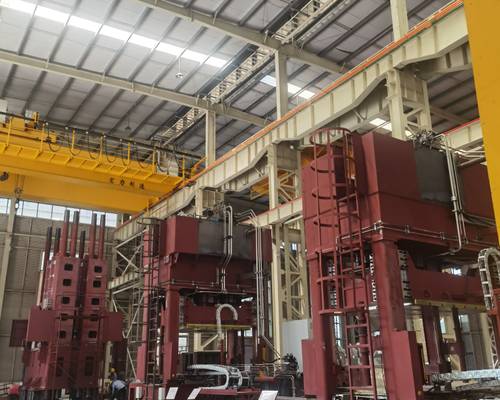 | 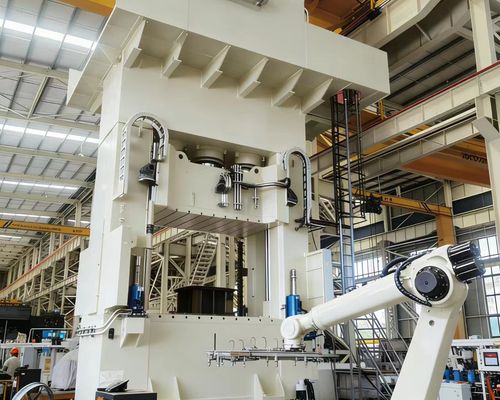 |
Core content
1. The "power showdown" of metal materials: forging and stamping and drawing
Metal forging: It mainly targets metal billets at high temperatures, applying huge static pressure to cause plastic deformation, thereby obtaining forgings with dense internal structure and excellent mechanical properties. It is widely applied to key safety components such as crankshafts and connecting rods in automotive engines.
Sheet metal stamping/drawing: Utilizing a hydraulic press to drive a die, metal sheets are punched, bent or deeply drawn to form various complex shapes. It is commonly seen in the manufacturing of products such as car doors, home appliance shells, and kitchenware.
2. The powerful tool in the "lightweight" era: Composite material compression molding and rapid hydraulic forming
Composite material molding: Pre-impregnated materials or sheet molding compounds (SMC) are placed in the mold cavity and cured and formed through heating and pressurization. The components produced by this process are of high strength and light weight, making them darlings in the aerospace and new energy vehicle fields.
Rapid hydraulic forming: It is particularly suitable for manufacturing complex hollow thin-walled parts (such as car engine brackets, bicycle frames). The internal high-pressure liquid causes the tube blank to expand, closely adhering to the mold cavity, achieving seamless integrated molding, which combines light weight with high strength.
3. The details reveal the truth: Powder Forming and Precision Forming
Powder forming: Metal or ceramic powder is filled into molds, pressed into a predetermined shape by a hydraulic press, and then sintered to become the finished product. This process has an extremely high material utilization rate and is particularly suitable for manufacturing complex small parts such as gears and oil-impregnated bearings.
Precision forming: Emphasizing precise control of pressure, speed and position, it ensures that the dimensional tolerance of the product reaches the micrometer level, meeting the extreme precision requirements in fields such as electronics and medical devices.
Pengyu Xingtai Knowledge Summary
The choice of hydraulic process depends on your material properties, product structure, output and performance requirements. Pengyu Xingtai inherits the precision technology heritage of Taiwan and can provide customers in various industries with a complete set of solutions ranging from process consultation, equipment selection to full-line delivery, helping you overcome material forming challenges.

